


[[ data.name ]]
[[ data.ticker ]]
[[ data.price ]] [[ data.change ]] ([[ data.changePercent ]]%)
Low: [[ data.low ]]
High: [[ data.high ]]
Overview
Related Markets
Trading Insights
Overview
Related Markets
Trading Insights
Frontline is a global shipping company focused on transporting crude oil via a large fleet of tankers. The frontline stock is listed on the Oslo Stock Exchange under the symbol FRO.NO and is widely followed by traders looking for exposure to energy logistics.
The frontline stock rate is closely tied to global oil demand and tanker freight markets. Its movements tend to reflect shifts in shipping rates, geopolitical developments, and macroeconomic conditions, making it a cyclical and often volatile asset.
Market Overview
Frontline stock is traded on the Oslo Stock Exchange and quoted in Norwegian krone (NOK). As part of the energy transportation sector, it sits at the intersection of oil markets and global trade flows.
Typical market participants include:
- Institutional investors tracking the energy and shipping sectors
- Retail traders focused on cyclical stocks
- Commodity traders monitoring oil-linked equities
What Moves the Frontline Stock Rate
The frontline stock rate is influenced by several core drivers:
- Global oil demand: Higher consumption increases tanker utilisation
- Tanker freight rates: Spot and charter rates directly affect earnings
- Geopolitical developments: Sanctions and trade disruptions reshape shipping routes
- Fleet supply dynamics: Availability of tankers impacts pricing power
- OPEC+ production decisions: Changes in output affect shipping volumes
- Economic growth trends: Strong growth supports energy demand and transport
Factors Affecting Frontline Stock
Supply and Demand
- Increased crude exports drive demand for tanker capacity
- Oversupply of vessels can reduce freight rates and margins
Oil Market Conditions
- Production levels influence shipping volumes
- Storage demand (e.g. floating storage) can increase tanker usage
Interest Rates
- Higher rates increase financing costs for fleet expansion
- May impact investor appetite for cyclical stocks5
Currency Exposure
- Revenue is often linked to USD, while the stock trades in NOK
- Exchange rate fluctuations affect reported performance
Regulation and Environmental Policy
- Stricter emissions rules can raise operating costs
- Fleet upgrades may be required to stay competitive
Market Sentiment
- Investor expectations around oil markets and shipping cycles
- High sensitivity to macroeconomic and geopolitical news
Trading Frontline Stock with CFDs
Traders may access exposure to frontline stock price movements through CFDs, without owning the underlying shares.
Key aspects of trading include:
- Ability to go long or short depending on market direction
- Use of leverage to increase exposure
- Importance of risk management due to volatility
- Execution quality and potential slippage can affect results
Frontline operates within the global oil shipping ecosystem, linking it to several correlated markets.
Comparable Shipping Stocks
- Euronav NV
- DHT Holdings
- Hafnia Limited
These companies are exposed to similar freight rate cycles and market conditions.
Oil Benchmarks
Oil benchmarks drive global shipping demand and influence tanker utilisation.
Macro and Sector Links
- Energy sector indices
- Global trade and industrial activity indicators
- Freight rate benchmarks (tanker spot rates)
How Traders Analyse Frontline Stock
Traders typically combine multiple approaches:
Fundamental analysis
- Freight rate trends and tanker demand
- Company earnings linked to shipping cycles
- Fleet size and utilisation rates
Technical analysis
- Trend identification using moving averages
- Support and resistance levels
- Momentum indicators such as RSI or MACD
Trading Tools
Common tools include:
- Charting platforms for rate analysis
- Volume indicators to assess participation
- Correlation tracking with oil markets
Risk Considerations
Key risks when trading frontline stock:
- High volatility due to cyclical shipping markets
- Sensitivity to geopolitical disruptions
- Dependence on global economic conditions
- Leverage increases both potential gains and losses
Portfolio Use Cases
Frontline stock may be used to:
- Gain indirect exposure to oil transportation
- Diversify within the energy sector
- Trade short-term cycles in tanker rates
Conclusion
The frontline stock reflects exposure to global oil shipping dynamics, with its rate driven by freight markets, oil demand, and macro trends. For traders, it is sensitive to cyclical opportunities influenced by both energy markets and global trade conditions.
| Swap long | [[ data.swapLong ]] points |
|---|---|
| Swap short | [[ data.swapShort ]] points |
| Spread min | [[ data.stats.minSpread ]] |
| Spread avg | [[ data.stats.avgSpread ]] |
| Min contract size | [[ data.minVolume ]] |
| Min step size | [[ data.stepVolume ]] |
| Commission and Swap | Commission and Swap |
| Leverage | Leverage |
| Trading Hours | Trading Hours |
* The spreads provided are a reflection of the time-weighted average. Though Skilling attempts to provide competitive spreads during all trading hours, clients should note that these may vary and are susceptible to underlying market conditions. The above is provided for indicative purposes only. Clients are advised to check important news announcements on our Economic Calendar, which may result in the widening of spreads, amongst other instances.
The above spreads are applicable under normal trading conditions. Skilling has the right to amend the above spreads according to market conditions as per the 'Terms and Conditions'.
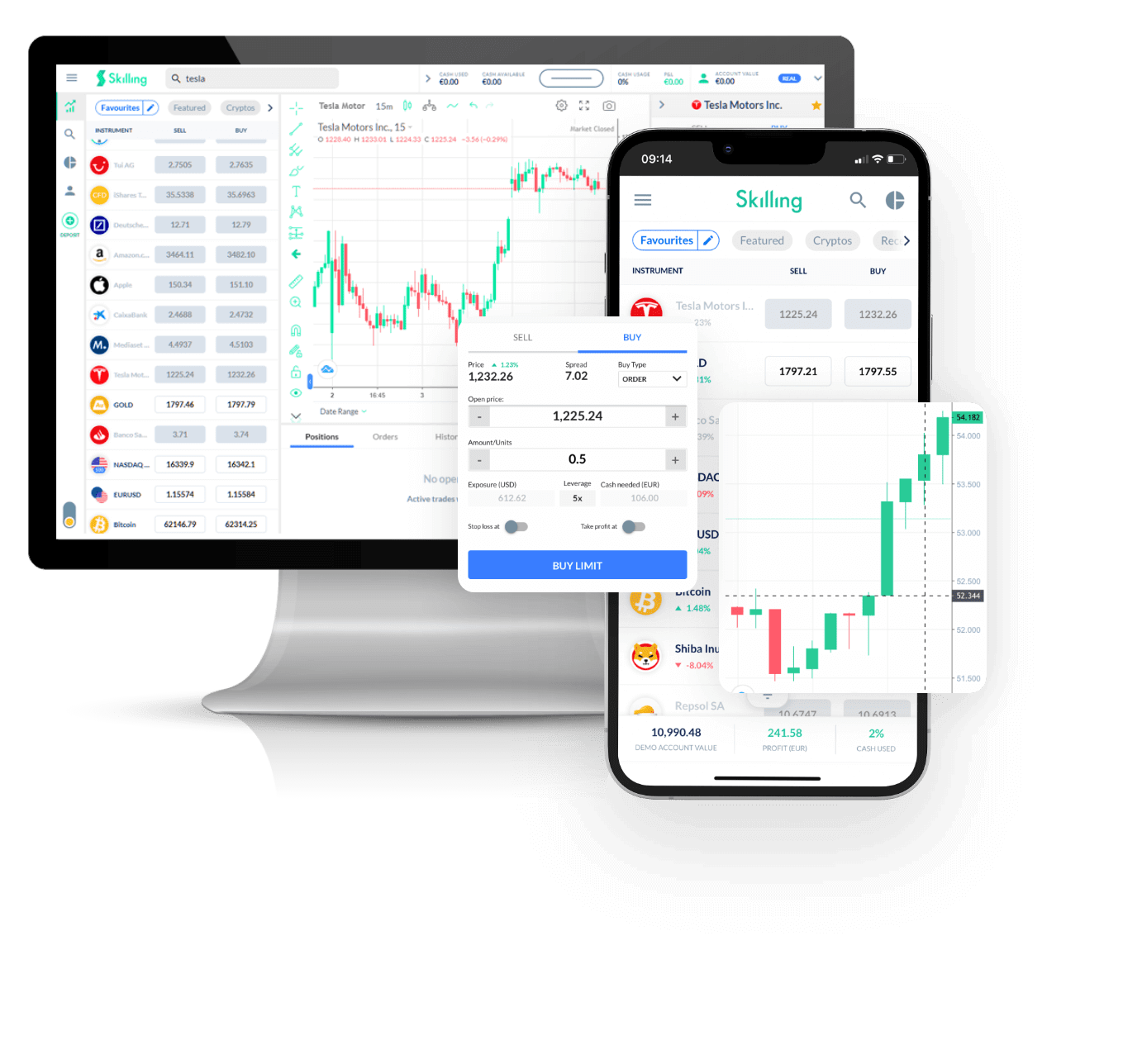
Trade [[data.name]] CFD with Skilling
All hassle-free, with flexible trade sizes and seamless trading experience!
- Check trading hours for this market
- Minimum margin requirements
- No commission, other fees may apply
- Easy to use platform
Why Trade [[data.name]]
Make the most of price fluctuations - no matter what direction the price swings and without capital restrictions that come with buying the underlying asset.
CFDs
Equities

Capitalise on rising prices (go long)


Capitalise on falling prices (go short)

Trade with leverage
Hold larger positions than the cash you have at your disposal

Trade on volatility
No need to own the asset

No commissions
Spreads and swaps apply. Other fees may apply.

Manage risk with in-platform tools
Ability to set take profit and stop loss levels