


[[ data.name ]]
[[ data.ticker ]]
[[ data.price ]] [[ data.change ]] ([[ data.changePercent ]]%)
Low: [[ data.low ]]
High: [[ data.high ]]
Overview
Related Markets
Trading Insights
Overview
Related Markets
Trading Insights
Apple (AAPL) is one of the most influential technology stocks in global financial markets. As a multinational company focused on consumer electronics, software, and digital services, Apple plays a central role in shaping innovation trends and investor sentiment within the tech sector.
Institutional and retail traders closely follow the Apple stock price due to its size, liquidity, and weighting in major indices. Its value often reflects not only the company's performance but also broader macroeconomic trends and technology-sector dynamics.
For traders, Apple has historically shown consistent volatility, strong market participation, and clear reaction patterns to earnings, product launches, and macroeconomic data.
Market Overview
Apple shares are listed on the NASDAQ exchange under the symbol AAPL. It is one of the largest companies globally by market capitalisation and a key component of major indices such as the US100 and SPX 500.
The Apple stock rate is quoted in US dollars and trades during standard US market hours. Due to its global relevance, Apple also sees high trading activity outside regular sessions through extended-hours trading.
Participants in the Apple market include:
- Institutional investors (hedge funds, pension funds)
- Retail traders
- ETF and index fund managers
- Algorithmic and high-frequency traders
What Moves the Apple Stock Price
Several key drivers influence the Apple stock price:
1. Earnings Reports
Quarterly earnings releases are one of the most significant catalysts. Revenue, profit margins, and forward guidance often trigger strong price movements.
2. iPhone and Product Demand
Apple’s hardware sales, especially iPhones, remain a core revenue driver. Demand cycles and product launches can influence valuation expectations.
3. Services Growth
Revenue from services such as iCloud, Apple Music, and App Store contributes to recurring income and affects the long-term growth outlook.
4. Macroeconomic Conditions
Interest rates, inflation, and global economic growth influence investor appetite for large-cap tech stocks like Apple.
5. US Dollar Strength
As a global company, Apple’s international revenue is impacted by currency fluctuations, particularly the strength of the US dollar.
6. Market Sentiment & Tech Sector Trends
Apple is often used as an indicator for the broader tech sector trends. Positive or negative sentiment toward technology stocks can directly influence their price.
Factors Affecting Apple Stock Price
Additional factors that influence Apple’s valuation include:
- Supply chain conditions: Disruptions in semiconductor or manufacturing supply chains
- Innovation cycles: New product categories or technological advancements
- Competition: Pressure from other global tech companies
- Regulation: Antitrust scrutiny and data privacy regulations
- Dividend policy & share buybacks: Capital return strategies potentially impacting investor demand
- Global demand trends: Consumer spending patterns across key markets
Trading Apple (AAPL) CFDs
Apple shares can be traded using CFDs, allowing traders to speculate on price movements without owning the underlying stock.
Key features of trading Apple CFDs:
- Ability to go long or short depending on market direction
- Use of leverage to gain exposure to price movements
- Access to both rising and falling markets
Traders should also consider risks such as volatility, slippage, and execution conditions when trading Apple CFDs.
Apple is closely connected to several other markets and assets, which traders often monitor for correlation and sector insights.
Technology Sector Peers
These companies are often grouped together due to similar growth characteristics and influence on global indices.
Indices
Apple has significant weighting in these indices, meaning its price movements can influence overall index performance.
Supply Chain & Semiconductor Stocks
- NVIDIA (NVDA)
- Qualcomm (QCOM)
- Taiwan Semiconductor (TSMC)
These companies play a role in Apple’s production ecosystem.
Related Themes
- Consumer electronics demand
- AI and software ecosystems
- Global smartphone market trends
How Traders Analyse Apple
Traders typically combine fundamental and technical analysis when evaluating Apple:
- Fundamental analysis: Earnings reports, revenue growth, product cycles
- Technical analysis: Trend lines, support/resistance levels, moving averages
- Event-driven trading: Product launches and earnings announcements
Common Tools and Indicators
Popular tools used when trading Apple include:
- Moving averages (50-day, 200-day)
- Relative Strength Index (RSI)
- MACD indicator
- Volume analysis
- Price action and chart patterns
Risk Considerations
When trading Apple CFDs, key risks include:
- High volatility during earnings releases
- Sensitivity to macroeconomic news
- Sector-wide corrections in tech stocks
- Slippage during fast-moving market conditions
Portfolio Use Cases
Apple is often used in portfolios as:
- A core large-cap tech exposure
- A proxy for innovation and growth sectors
- A liquid asset for short-term trading strategies
Conclusion
Apple (AAPL) remains one of the most actively traded stocks globally, driven by strong fundamentals, global demand, and its influence on major indices. For traders, it tends to reflect a combination of liquidity, volatility, and clear price drivers, making it a widely analysed and traded instrument across different strategies.
| Swap long | [[ data.swapLong ]] points |
|---|---|
| Swap short | [[ data.swapShort ]] points |
| Spread min | [[ data.stats.minSpread ]] |
| Spread avg | [[ data.stats.avgSpread ]] |
| Min contract size | [[ data.minVolume ]] |
| Min step size | [[ data.stepVolume ]] |
| Commission and Swap | Commission and Swap |
| Leverage | Leverage |
| Trading Hours | Trading Hours |
* The spreads provided are a reflection of the time-weighted average. Though Skilling attempts to provide competitive spreads during all trading hours, clients should note that these may vary and are susceptible to underlying market conditions. The above is provided for indicative purposes only. Clients are advised to check important news announcements on our Economic Calendar, which may result in the widening of spreads, amongst other instances.
The above spreads are applicable under normal trading conditions. Skilling has the right to amend the above spreads according to market conditions as per the 'Terms and Conditions'.
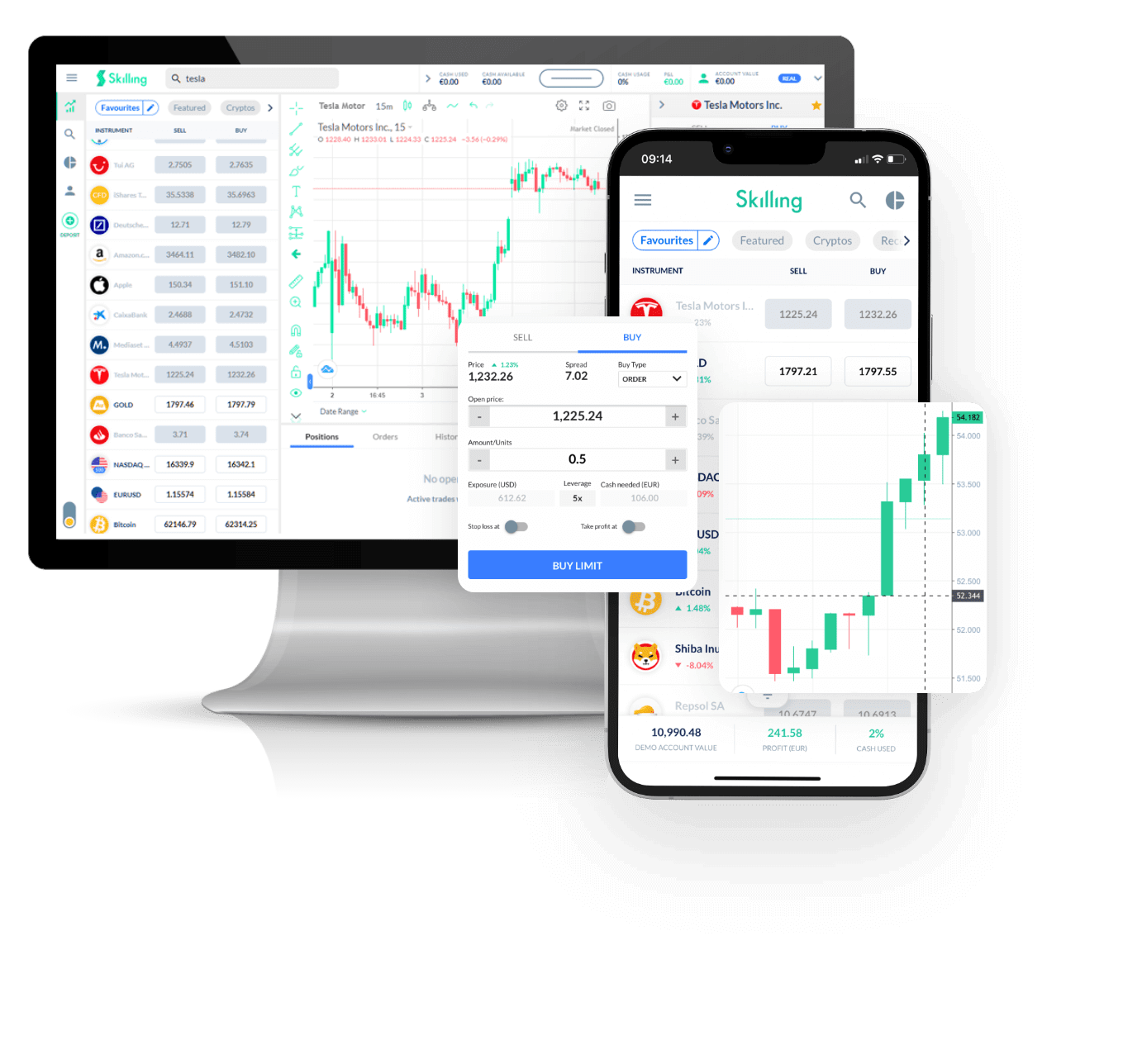
Trade [[data.name]] CFD with Skilling
All hassle-free, with flexible trade sizes and seamless trading experience!
- Trade 24/5
- Minimum margin requirements
- No commission, only spread
- Easy to use platform
Are Apple shares a good investment?
Apple shares have been on a bit of a roller coaster ride in recent years. The company has faced several challenges, including declining iPhone sales and mounting pressure from activist investors.However, Apple shares have also seen some bright spots. The company has reported strong revenue growth in its services business, and its new iPhone models have been well-received by consumers.
Given all of these factors, Apple shares may be a good trade for investors who are willing to take on some risk. Those who are looking for a more stable investment may want to consider other options.
Who owns most Apple shares?
The answer may surprise you – it's not Steve Jobs, or even current CEO Tim Cook. In fact, the majority shareholder of Apple is actually an investment management firm called Capital World Investors. As of May 2013, Capital World Investors owned just over 7% of Apple's shares, making it the largest individual shareholder in the company.
Interestingly, Capital World Investors is not even the biggest institutional shareholder in Apple; that honor belongs to Vanguard Group, which owns approximately 5.8% of Apple's shares. However, Vanguard is a mutual fund, meaning that its ownership is spread out across many different investors, rather than being concentrated in one entity.
So there you have it – the largest shareholder in Apple is actually an investment firm that you may not have even heard of. But it just goes to show that even the biggest companies can be owned by relatively unknown entities.
Do Apple shares pay dividends?
Yes, Apple shares do pay dividends. As of May 2019, the dividend yield on Apple shares was 1.62%. This means that for every $100 worth of Apple shares, investors would receive $1.62 in dividends per year. While this may not seem like a lot, it does add up over time, especially if you are reinvesting those dividends back into Apple shares. And, of course, dividend yields can change over time, so it's possible that the yield on Apple shares could go up or down in the future.
Why Trade [[data.name]]
Make the most of price fluctuations - no matter what direction the price swings and without capital restrictions that come with buying the underlying asset.
CFDs
Equities

Capitalise on rising prices (go long)


Capitalise on falling prices (go short)

Trade with leverage
Hold larger positions than the cash you have at your disposal

Trade on volatility
No need to own the asset

No commissions
Just low spreads

Manage risk with in-platform tools
Ability to set take profit and stop loss levels