


[[ data.name ]]
[[ data.ticker ]]
[[ data.price ]] [[ data.change ]] ([[ data.changePercent ]]%)
Low: [[ data.low ]]
High: [[ data.high ]]
About
History
Differences between Investing vs Trading
About
History
Differences between Investing vs Trading
Wheat is one of the world’s most commonly traded commodities. It is used in a variety of products, from bread and pasta to beer, ethanol and animal feed. The trade of wheat involves a complex network of farmers, traders, processors, shippers, brokers and consumers who interact in global markets.
For centuries, wheat has been an important part of the global economy. It is one of the oldest and most widely grown crops, with thousands of varieties cultivated around the world. In fact, wheat accounts for about 20 percent of all calories consumed by humans globally. Wheat’s trading history dates back to ancient Egypt, where grain was used as a form of payment. Today, wheat is traded all over the world on commodity exchanges, mainly through futures contracts. Prices are influenced by factors such as weather conditions, export policies, crop yields, agricultural subsidies and more.
Wheat prices have moved sharply over time, driven mainly by weather, harvests and government policy. In 2008, wheat futures in Chicago reached a record of around $13 a bushel. In August 2010, Russia banned grain exports after a severe drought, which pushed global wheat prices higher.
In early 2022, the war between Russia and Ukraine, two of the world’s largest wheat exporters, sent prices back to similar record levels. Events like these show how quickly supply shocks can move the wheat price, and why weather, export policies and geopolitics remain among the main factors traders follow.
When it comes to trading wheat, one of the main differences between CFDs and investing in the actual commodity is the leverage that you get with CFDs. With a CFD, you can control much larger amounts of wheat than you would be able to do if you just invested directly in the physical commodity. This means that you can open larger positions with a smaller amount of capital.
However, it also means that your potential losses are amplified as well, and losses can build quickly if the market moves against you. Negative balance protection is provided to eligible retail clients, so you cannot lose more than your account balance. Another difference is that when trading wheat CFDs, there is no need to store the physical asset unlike in traditional investing where storage costs may be incurred.
| Swap long | [[ data.swapLong ]] points |
|---|---|
| Swap short | [[ data.swapShort ]] points |
| Spread min | [[ data.stats.minSpread ]] |
| Spread avg | [[ data.stats.avgSpread ]] |
| Min contract size | [[ data.minVolume ]] |
| Min step size | [[ data.stepVolume ]] |
| Commission and Swap | Commission and Swap |
| Leverage | Leverage |
| Trading Hours | Trading Hours |
* The spreads provided are a reflection of the time-weighted average. Though Skilling attempts to provide competitive spreads during all trading hours, clients should note that these may vary and are susceptible to underlying market conditions. The above is provided for indicative purposes only. Clients are advised to check important news announcements on our Economic Calendar, which may result in the widening of spreads, amongst other instances.
The above spreads are applicable under normal trading conditions. Skilling has the right to amend the above spreads according to market conditions as per the 'Terms and Conditions'.
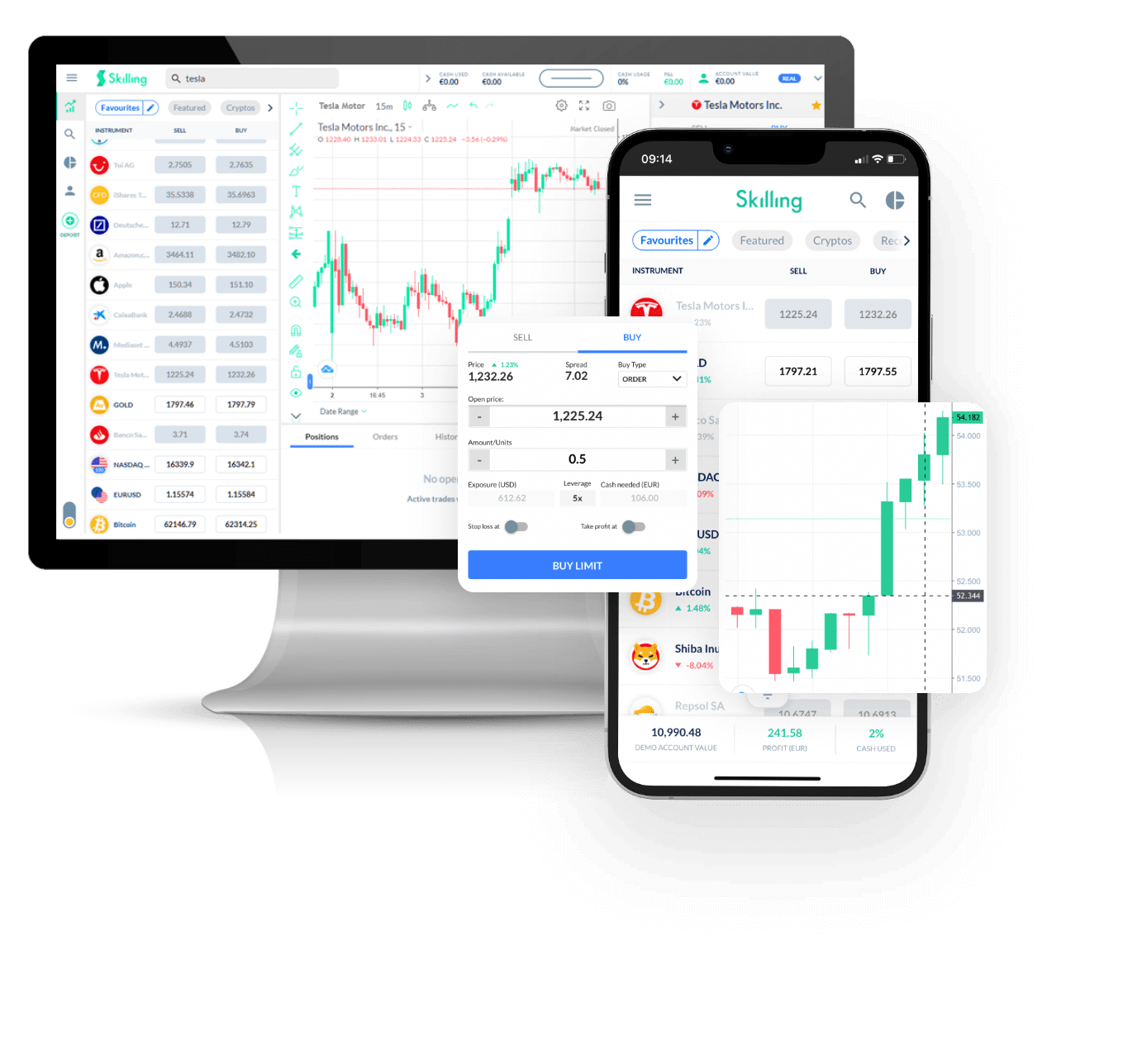
Trade [[data.name]] CFD with Skilling
Take a view on the commodity sector!
- Trading hours vary by market
- Tight spreads
- Average Execution at 0.05s
- Easy to use platform
FAQs
What affects Wheat prices?
Wheat prices are affected by a number of factors, including global supply and demand, weather conditions, government policies, trade agreements, and geopolitical events. For example, Russia’s grain export ban in 2010 and the start of the war in Ukraine in 2022 both pushed prices higher, while strong harvests in major producing countries can increase supply and push prices lower. Changes in the US dollar and in energy and fertilizer costs can also affect prices. It is important to stay informed of news and events like these, as they can have a substantial impact on wheat prices.
How to trade Wheat CFD?
Wheat CFDs let you trade on the price movements of wheat without owning the physical commodity. However, as with any type of trading, there are certain things to take note of before entering into a trade. Here are some important considerations when trading Wheat CFDs:
1. Monitor news and supply/demand levels – The wheat price can be impacted by news, events and supply/demand levels. It is important to closely monitor these factors in order to make informed trading decisions.
2. Choose a regulated broker – Check that your broker is regulated and is clear about its costs, including spreads, swaps and any other fees.
3. Utilize risk management strategies – Wheat CFDs can be volatile and risky, so it is important to use risk management tools such as stop-loss and take-profit orders in order to protect your capital.
4. Understand leverage – Leverage lets you open larger positions with less capital, but it increases losses as well as gains. Use it carefully and make sure you understand the risks of trading on margin.
By understanding the different aspects of Wheat CFD trading and utilizing the right strategies, traders can make more informed decisions when trading wheat CFDs.
What are the other options for trading Wheat?
Apart from trading Wheat, there are other options to consider. For instance, multinational companies that highly depend on Wheat can be an interesting option for traders. These multinational companies may include agricultural commodity producers and processors such as food and beverage giants like General Mills and Kraft Heinz.
Trading in these products enables traders to gain exposure to the Wheat market, as well as leverage the potential of price movements in these companies. Additionally, traders can diversify their portfolios by trading in other agricultural commodities such as Corn, Soybeans and Cotton.
Why Trade [[data.name]]
Make the most of price fluctuations - no matter what direction the price swings and without the restrictions that come with owning the underlying asset.
CFD
Actual Commodities

Capitalise on rising prices (go long)


Capitalise on falling prices (go short)

Trade with leverage

Trade on volatility

No commissions
Spreads and swaps apply. Other fees may apply.

Manage risk with in-platform tools
Ability to set take profit and stop loss levels