


[[ data.name ]]
[[ data.ticker ]]
[[ data.price ]] [[ data.change ]] ([[ data.changePercent ]]%)
Low: [[ data.low ]]
High: [[ data.high ]]
Overview
Related Markets
Trading Insights
Overview
Related Markets
Trading Insights
REC Silicon is a Norway-based materials company focused on producing silicon materials for the semiconductor and solar industries. The company supplies polysilicon and silicon gases that are essential for electronics manufacturing, solar panels, and advanced industrial applications.
The REC Silicon share is listed on the Oslo Stock Exchange under the symbol REC.NO. The stock is closely followed by traders interested in renewable energy, semiconductor supply chains, and industrial technology trends. Developments often influence its price movements in global solar demand, chip manufacturing activity, and geopolitical trade policies.
REC Silicon has historically attracted significant market attention because of its exposure to two rapidly evolving industries: clean energy and semiconductors. This combination can create periods of elevated volatility, making the stock relevant for both short-term traders and long-term market participants.
Market Overview
REC Silicon is traded on the Oslo Stock Exchange and is classified within the industrial materials and semiconductor supply sector. The REC.NO price is quoted in Norwegian kroner (NOK).
The stock is commonly traded by:
- Retail traders
- Institutional investors
- Renewable energy-focused funds
- Semiconductor sector investors
- Short-term momentum traders
Trading activity in REC.NO can increase during:
- Quarterly earnings releases
- Semiconductor industry updates
- Solar market policy announcements
- US-China trade developments
- Major supply agreement announcements
Because REC Silicon operates in globally connected industries, international market sentiment can influence trading volumes and volatility.
What moves the REC Silicon price?
Semiconductor Demand
Demand for semiconductors directly impacts the need for silicon materials. Growth in AI infrastructure, electronics manufacturing, and data centres can influence REC Silicon’s revenue outlook and market sentiment.
Solar Industry Growth
REC Silicon has exposure to the solar energy sector through polysilicon production. Expanding solar installations and renewable energy investment can support stronger long-term demand expectations.
Trade Policies and Tariffs
The company has historically been affected by international trade tensions, especially between the US and China. Tariffs, export restrictions, and supply chain regulations can influence production economics and investor confidence.
Silicon Material Prices
Changes in global polysilicon pricing can affect margins and profitability expectations. Commodity-like pricing dynamics may create fluctuations in the REC.NO price.
Production Capacity and Operational Updates
Factory utilisation rates, production restarts, and operational efficiency updates are closely monitored by traders. Delays or disruptions can impact sentiment rapidly.
Broader Market Risk Sentiment
Growth-oriented industrial and technology stocks often react to interest rate expectations, inflation data, and broader equity market volatility.
Factors Affecting REC Silicon Price
Supply and Demand Dynamics
- Semiconductor manufacturing growth
- Solar panel production demand
- Global polysilicon supply levels
- Inventory cycles within technology industries
Macroeconomic Conditions
- Global industrial activity
- Interest rate decisions
- Inflation expectations
- Economic growth forecasts
Energy Prices
Silicon production can be energy-intensive. Changes in electricity and energy costs may influence operating margins.
Currency Movements
REC Silicon operates internationally, meaning exchange rate fluctuations between NOK and USD may affect financial results.
Government Policy
- Renewable energy subsidies
- Semiconductor investment programmes
- Environmental regulations
- Trade restrictions
Investor Sentiment
Market enthusiasm around AI, green energy, and semiconductor expansion can influence speculative activity in the stock.
Trading REC Silicon CFDs
REC Silicon CFDs allow traders to speculate on price movements without owning the underlying share directly.
CFD trading enables market participants to:
- Trade rising and falling markets
- Use leverage
- Access short-term market movements
- React to earnings and sector news
Given that leverage can amplify both potential gains and losses, effective risk management is an important consideration when trading REC.NO CFDs. Traders often monitor volatility closely due to the stock’s sensitivity to industry developments and broader macroeconomic sentiment.
Semiconductor Sector Stocks
REC Silicon is closely connected to the global semiconductor supply chain. Traders often compare REC.NO with semiconductor equipment and materials companies.
Related assets include:
Strong semiconductor demand can positively influence sentiment across the broader supply chain.
Renewable Energy Stocks
Because REC Silicon supplies materials linked to solar production, the stock may also correlate with renewable energy trends.
Related sectors include:
- Solar panel manufacturers
- Clean energy ETFs
- Green technology companies
- Industrial materials suppliers
Commodity and Industrial Markets
Silicon material pricing and industrial demand conditions can affect REC Silicon's performance. Traders often monitor:
- Industrial metals
- Energy markets
- Manufacturing indices
- Global supply chain indicators
Nordic Industrial Stocks
REC.NO is part of the broader Nordic industrial and technology market environment. Investor sentiment toward Scandinavian industrial equities can sometimes affect trading flows.
How Traders Analyse REC Silicon
Fundamental Analysis
Traders often monitor:
- Revenue growth
- Production volumes
- Supply agreements
- Semiconductor market forecasts
- Solar sector demand trends
Quarterly earnings reports are especially important because they provide updates on operational performance and margin development.
Technical Analysis
Technical traders commonly use:
- Moving averages
- Relative Strength Index (RSI)
- MACD indicators
- Volume analysis
- Support and resistance levels
Because REC.NO can experience high volatility, momentum analysis is often used for short-term trading decisions.
News and Event Monitoring
Important events include:
- Earnings releases
- Factory production updates
- Semiconductor policy announcements
- Renewable energy legislation
- International trade developments
Risk Considerations
REC Silicon trading involves several risks:
- High market volatility
- Dependence on cyclical industries
- Sensitivity to geopolitical developments
- Commodity pricing fluctuations
- Operational execution risks
Technology and renewable energy sentiment shifts can lead to rapid changes in the REC.NO price.
Portfolio Use Cases
Some traders use REC Silicon exposure for:
- Semiconductor sector diversification
- Renewable energy market exposure
- Short-term volatility trading
- Thematic growth positioning
The stock may appeal to traders seeking exposure to industrial technology and clean energy supply chains simultaneously.
Conclusion
REC Silicon is a closely watched Norwegian industrial technology stock with exposure to both semiconductor manufacturing and renewable energy markets. The REC.NO price is influenced by global demand trends, trade policies, operational performance, and investor sentiment surrounding growth sectors.
For traders, REC Silicon CFDs provide potential opportunities to participate in both upward and downward market movements while gaining exposure to evolving technology and energy market themes.
Disclaimer
This article is provided for general informational and educational purposes only and should not be considered investment advice or a recommendation to trade. The content is prepared without regard to individual investment objectives or financial situations and may not meet standards for independent research. Past performance is not indicative of future results.
| Swap long | [[ data.swapLong ]] points |
|---|---|
| Swap short | [[ data.swapShort ]] points |
| Spread min | [[ data.stats.minSpread ]] |
| Spread avg | [[ data.stats.avgSpread ]] |
| Min contract size | [[ data.minVolume ]] |
| Min step size | [[ data.stepVolume ]] |
| Commission and Swap | Commission and Swap |
| Leverage | Leverage |
| Trading Hours | Trading Hours |
* The spreads provided are a reflection of the time-weighted average. Though Skilling attempts to provide competitive spreads during all trading hours, clients should note that these may vary and are susceptible to underlying market conditions. The above is provided for indicative purposes only. Clients are advised to check important news announcements on our Economic Calendar, which may result in the widening of spreads, amongst other instances.
The above spreads are applicable under normal trading conditions. Skilling has the right to amend the above spreads according to market conditions as per the 'Terms and Conditions'.
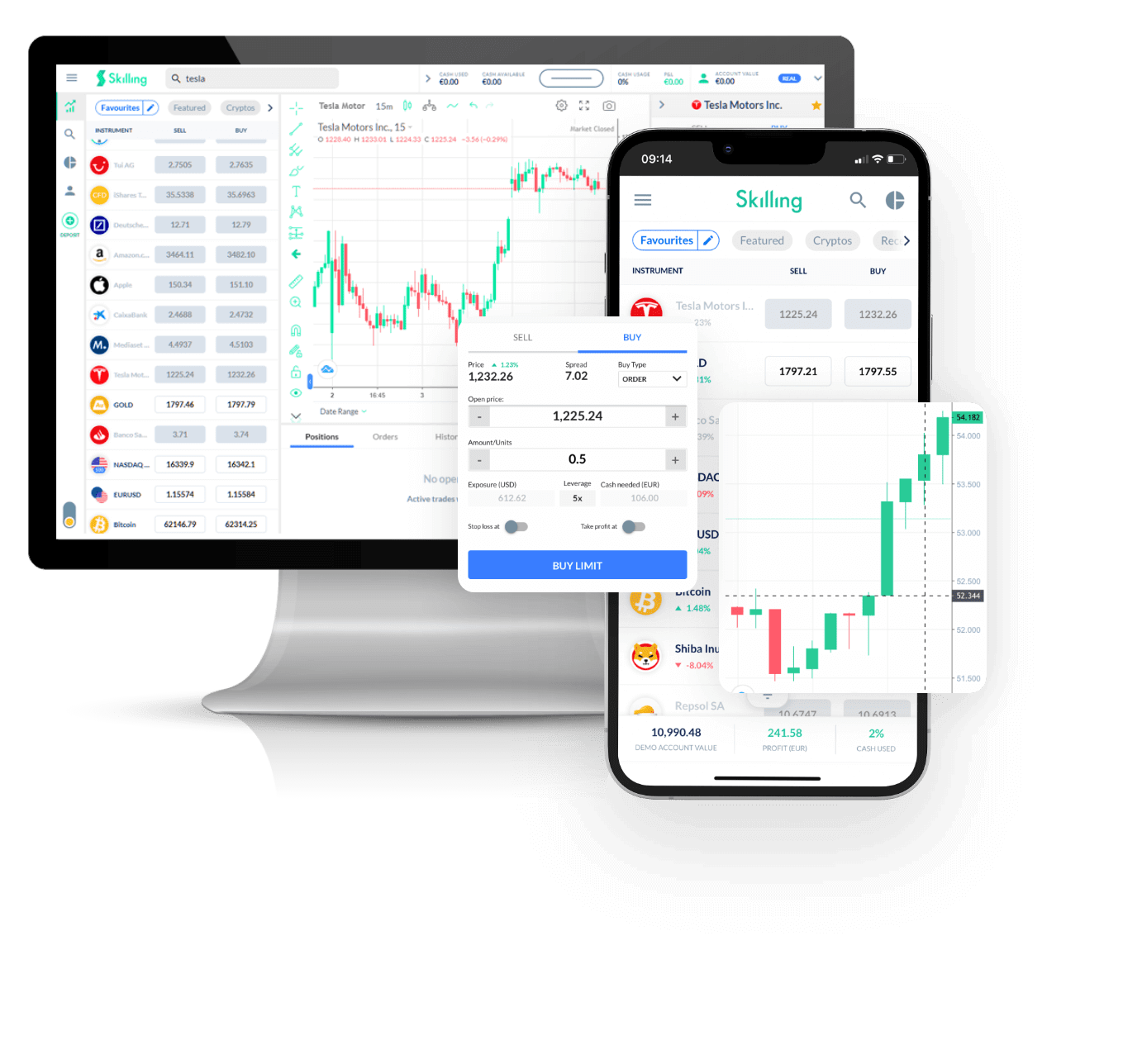
Trade [[data.name]] CFD with Skilling
All hassle-free, with flexible trade sizes and seamless trading experience!
- Trade 24/5
- Minimum margin requirements
- No commission, only spread
- Easy to use platform
Why Trade [[data.name]]
Make the most of price fluctuations - no matter what direction the price swings and without capital restrictions that come with buying the underlying asset.
CFDs
Equities

Capitalise on rising prices (go long)


Capitalise on falling prices (go short)

Trade with leverage
Hold larger positions than the cash you have at your disposal

Trade on volatility
No need to own the asset

No commissions
Just low spreads

Manage risk with in-platform tools
Ability to set take profit and stop loss levels