


[[ data.name ]]
[[ data.ticker ]]
[[ data.price ]] [[ data.change ]] ([[ data.changePercent ]]%)
Low: [[ data.low ]]
High: [[ data.high ]]
Overview
Related Markets
Trading Insights
Overview
Related Markets
Trading Insights
Gold: The Cornerstone of Global Financial Systems
Gold has long been a cornerstone of the global financial system, often serving as a store of value, a hedge against inflation, and is considered a key component in investment portfolios. Understanding the dynamics of gold pricing, including the use of tools like a gold price chart, is essential for investors, economists, and policymakers alike. This comprehensive analysis delves into the current state of the gold market, explores prevailing trends, examines the factors influencing gold prices, and discusses related commodities affected by gold's price movements.
Gold Price Financial Market Overview
The gold market operates within a complex financial ecosystem, predominantly influenced by a myriad of factors ranging from macroeconomic indicators to geopolitical events. Gold is traded globally, with major markets in New York (COMEX), London (LBMA), and Shanghai (SGE). The price of gold is typically quoted in U.S. dollars per troy ounce, and it fluctuates continuously during trading hours.
Gold price movements are typically driven by factors such as economic uncertainty, inflation expectations, and shifts in monetary policy. Traders looking to buy or sell gold often analyse these drivers alongside technical price trends.
Investors often analyse historical gold price trends to inform their decisions. Tools such as gold price charts, technical indicators, and position size calculators are commonly used by traders to monitor trends, manage risk, and refine their trading strategies. These tools are integral to developing a robust gold trading strategy.
Gold Market Trends and Drivers
During periods of economic uncertainty, gold has historically shown bullish tendencies, often breaking key resistance levels and attracting increased investor demand.
- Inflation Hedge : Gold is widely used as a hedge during periods of rising inflation, as investors seek to preserve purchasing power. As a result, many tend to use gold price charts to track real-time price movements.
- Geopolitical Tensions : Geopolitical instability, including conflicts and trade tensions, often increases demand for gold as a safe-haven asset. This has been observed to drive increased interest in strategies to buy gold during uncertain times.
- Central Bank Policies : Dovish monetary policies and interest rate cuts by central banks have reduced the opportunity cost of holding non-yielding assets such as gold, potentially affecting investors' demand.
- Currency Fluctuations : A weakening U.S. dollar has made gold cheaper for holders of other currencies, often boosting demand and driving up prices. Gold price prediction models often factor in currency trends to forecast future movements.
Factors That Affect Gold Price and the Gold Market
A complex interplay of factors influences the price of gold:
- Supply and Demand Dynamics : Gold supply is relatively inelastic, with mining production growing slowly. Demand, however, can fluctuate based on jewellery consumption, industrial use, and investment needs.
- Economic Indicators : Macroeconomic indicators such as GDP growth, employment data, and manufacturing activity influence investor sentiment and gold demand.
- Interest Rates : Higher interest rates increase the opportunity cost of holding gold, typically leading to lower prices, while lower rates have the opposite effect. Many traders also monitor real yields (inflation-adjusted interest rates), which tend to show a strong inverse relationship with gold prices.
- Inflation : Gold has historically been considered a hedge against inflation, often gaining attention when inflation expectations rise.
- Currency Strength : The value of the U.S. dollar inversely affects gold prices; a stronger dollar makes gold more expensive in other currencies, reducing demand.
- Geopolitical Events : Crises, wars, and political instability can drive investors toward gold as a safe-haven asset, increasing its price.
- Market Speculation : Investor behaviour, driven by market sentiment and speculative activities, can lead to short-term price volatility.
Trading Gold via CFDs
Many traders gain exposure to gold through CFDs, allowing them to speculate on price movements without owning the underlying asset.
Other Related Commodities Affected by the Price Action of Gold
Gold's price movements can influence other commodities, particularly those within the precious metals group:
- Silver : Often considered "poor man's gold," silver tends to move in correlation with gold, although it can exhibit higher volatility due to its dual role as both a precious and industrial metal. Traders commonly use the gold-to-silver ratio to assess the relative value between the two metals. Investors tend to use tools like the silver price calculator to monitor trends or analyse a silver price chart, comparing historical trends with gold.
- Platinum Price and Palladium Price : These metals, used extensively in industrial applications, can be affected by gold price trends, especially when investors seek alternatives within the precious metals sector.
- Mining Stocks : Companies involved in gold and silver mining often experience stock price fluctuations in line with precious metal prices, affecting the broader commodities market.
Gold Market Strategy and Broader Perspective
As investors and traders navigate the complexities of precious metals markets, many diversify their portfolios by combining gold trading strategies with ventures into silver, platinum, and palladium. Insights gained from gold price prediction and historical data are often applied across these related commodities.
The gold market is a dynamic and multifaceted component of the global financial system. Understanding the long-term drivers of gold, including inflation, interest rates, currency movements, and geopolitical risk, is essential for navigating the market.
By combining historical analysis with real-time data and trading tools, investors may potentially build more resilient and adaptive strategies in the evolving global financial landscape. Whether you aim to buy gold, sell gold, or explore opportunities across precious metals, combining macroeconomic analysis with technical tools and risk management strategies can contribute to improved decision-making in the gold market.
| Swap long | [[ data.swapLong ]] points |
|---|---|
| Swap short | [[ data.swapShort ]] points |
| Spread min | [[ data.stats.minSpread ]] |
| Spread avg | [[ data.stats.avgSpread ]] |
| Min contract size | [[ data.minVolume ]] |
| Min step size | [[ data.stepVolume ]] |
| Commission and Swap | Commission and Swap |
| Leverage | Leverage |
| Trading Hours | Trading Hours |
* The spreads provided are a reflection of the time-weighted average. Though Skilling attempts to provide competitive spreads during all trading hours, clients should note that these may vary and are susceptible to underlying market conditions. The above is provided for indicative purposes only. Clients are advised to check important news announcements on our Economic Calendar, which may result in the widening of spreads, amongst other instances.
The above spreads are applicable under normal trading conditions. Skilling has the right to amend the above spreads according to market conditions as per the 'Terms and Conditions'.
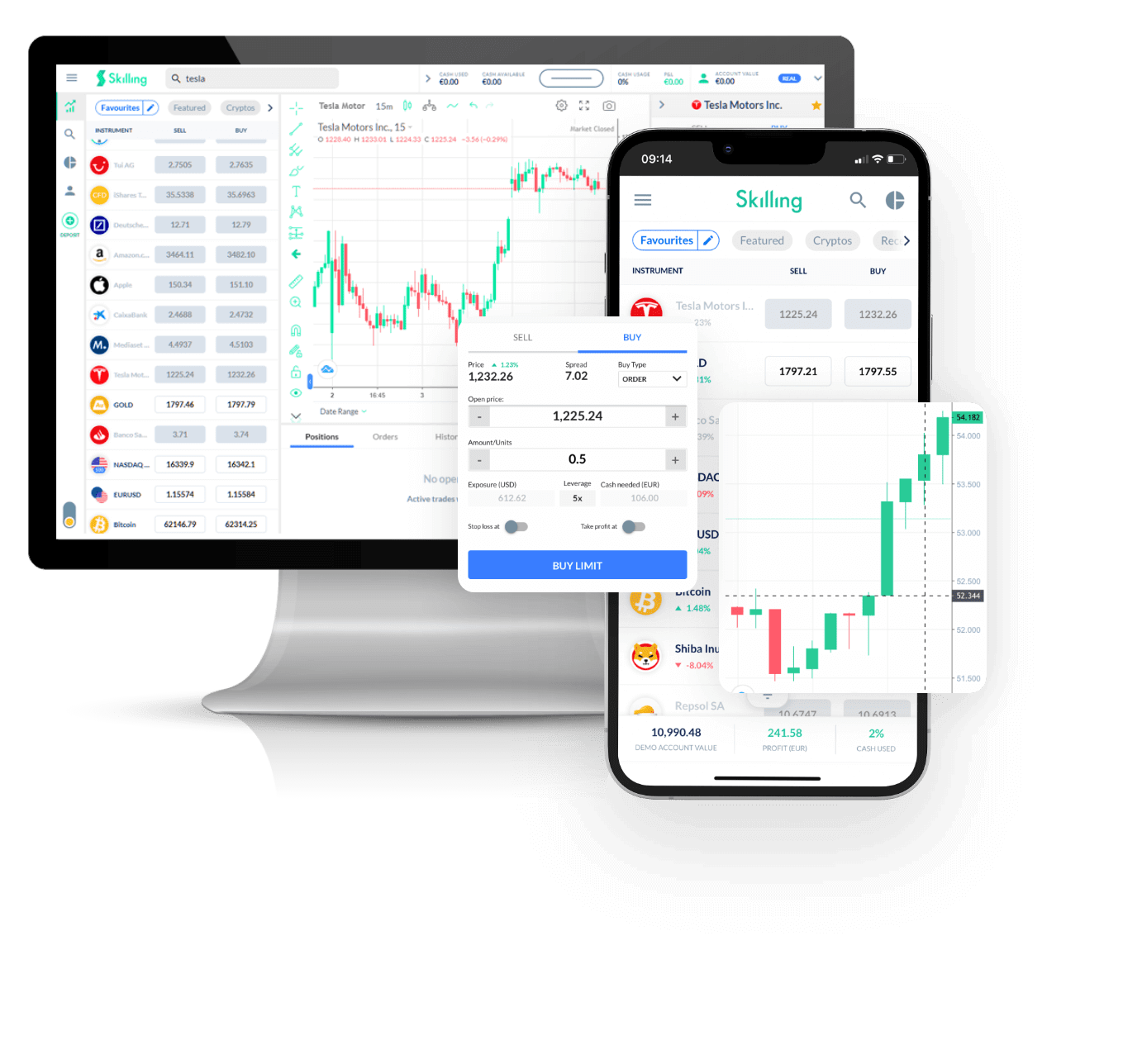
Trade [[data.name]] CFD with Skilling
Take a view on the commodity sector! Diversify with a single position.
- Trade 24/5
- Tight spreads
- Average Execution at 5ms
- Easy to use platform
FAQs
What are the differences between gold and silver?
Gold and silver are two of the world's most traded metals, but understanding their differences is a complex and ever-evolving task. Gold is often seen as a safe investment, since its value usually remains high even when other markets fluctuate. Conversely, silver can be more volatile due to its many industrial uses, so trading in it with CFDs carries more risk than investing in gold.
Nevertheless, some precious metal traders still find advantages to trading in silver over gold: the demand for industrial silver can lead to prices fluctuating which presents opportunities for savvy investors. Ultimately, differences between gold and silver depend largely on their respective market conditions; whilst one might gain at once time, the other could gain significantly at another.
How much gold is there available?
When it comes to gold resources, the amount available in the world today can vary widely. Estimates range from 165,000 tons to over 2 million tons, accounting for gold that is both accessible and inaccessible. What is certain is that gold continues to be a valuable asset and its worth fluctuates with market forces. Mining and gold prospecting remain very lucrative endeavors as a result of gold's inherent value.
In fact, gold has been used since ancient times as currency and still holds some significance in modern economies with countries like China leading the charge. Though gold may not be mined and traded as much as other commodities like oil or wheat, what gold there is available remains significant both economically and culturally worldwide.
How to trade gold?
Those wanting to trade gold have a few options; you could buy physical gold such as coins and bars, use futures and options, or opt for trading Contracts For Differences (CFDs). CFDs are essentially an agreement between two parties which stipulate how much money will be exchanged depending on how the price of an asset (in this case gold) changes.
By using CFDs when trading gold, you’ll benefit from the ability to leverage your position – meaning that you can open a larger position than with just your capital alone - but it’s worth noting that the higher risk associated requires careful consideration. That said, trading gold can be a great way to gain exposure to both upside potential and downside risk of owning physical gold at a fraction of the cost.
Why Trade [[data.name]]
Make the most of price fluctuations - no matter what direction the price swings and without the restrictions that come with owning the underlying asset.
CFD
Actual Commodities

Capitalise on rising prices (go long)


Capitalise on falling prices (go short)

Trade with leverage

Trade on volatility

No commissions
Just low spreads

Manage risk with in-platform tools
Ability to set take profit and stop loss levels